OMNI
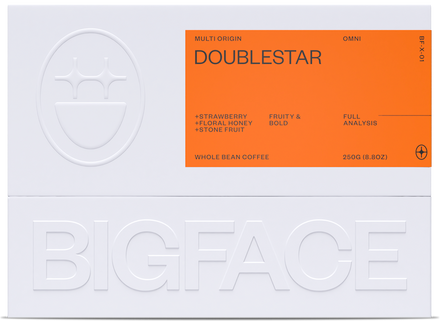
SUBSCRIBE & SAVEDOUBLESTAR
Fruity & Bold
$28
This is one of the most common questions in specialty coffee, and it is usually framed the wrong way. Single origin versus blend gets treated as a quality comparison — as if one is inherently better than the other, and choosing correctly signals something about your taste or your knowledge. It does not. They are different tools built for different purposes, and understanding what each one is actually designed to do makes you a sharper coffee drinker regardless of which one you reach for.
At BIGFACE, we work with both. The OMNI Trio is built on multi-origin blends. The isolated origin lineup is built on single lots from specific farms and regions. Here is how we think about both.
Single origin means the coffee in your bag comes from one defined place. That place can be a country, a region, a specific farm, or a specific lot within a farm. The more precise the designation, the more you know about what shaped the flavor in the cup. A bag labeled "Ethiopia" tells you something. A bag labeled "Gedeb, Yirgacheffe, natural process, smallholder cooperative" tells you considerably more.
At BIGFACE we use the term isolated origin rather than single origin because our sourcing goes to that second level of precision. We are not buying country-level lots. We are sourcing from specific farms, cooperatives, and microlots where we know the producer, the processing method, the altitude, and the harvest season. The isolated designation signals that level of traceability.
What single or isolated origin coffees deliver that blends cannot is a direct expression of place. The terroir — the combination of soil, altitude, climate, and processing — comes through without mediation. When you brew a washed Ethiopian from Gedeb, you are tasting what that specific corner of the world produces when it is handled with precision. That is a form of specificity that blending, by definition, cannot replicate.
A blend is a deliberate combination of coffees from two or more origins, combined to achieve a flavor profile that no single origin produces on its own. The best blends are not made from leftover inventory. They are constructed intentionally, with each component chosen for what it contributes to the whole and how those contributions interact.
Blending gives roasters tools that single origins do not. You can engineer body from one origin, brightness from another, and sweetness from a third. You can build in consistency across seasons by substituting components when a specific harvest varies. You can target a specific use case — espresso, milk drinks, OMNI versatility — and construct a blend that performs consistently in that context regardless of the variability in any single component.
Doublestar exists because we wanted a coffee that delivers fruit energy, grounding structure, and OMNI versatility simultaneously. No single origin we source does all three of those things at the same time in the same cup. The blend makes it possible.

Single origin coffees are at their best when the goal is specificity and exploration. If you want to understand what Ethiopian coffee tastes like versus Colombian. If you want to compare a washed process against a natural from the same region. If you want to follow a producer across harvests and taste how a single farm's coffee changes season to season. These are experiences that only isolated origin coffees can provide.
They are also the format where terroir is most legible. The best isolated origin coffees are memorable in the way a specific place is memorable, you can close your eyes and identify them from the cup. An Kanzu Station from Rwanda tastes like a Kanzu Station from Rwanda. That specificity is the point, and it is irreplaceable.
Single origin coffees also tend to reward slower brewing methods — pour-over, French press, AeroPress, where the full character of the lot has space to express. Espresso amplifies everything, which makes single origin espressos either extraordinary or challenging depending on the profile. The variance is part of the experience for those who seek it.
Blends are at their best when the goal is consistency, versatility, and accessibility. If you want one coffee that works across every brew method you use. If you are making espresso for milk drinks and need a profile that holds up under steamed oat milk without disappearing. If you want a coffee that performs reliably every morning without requiring dialing in from scratch. Blends are built for those situations.
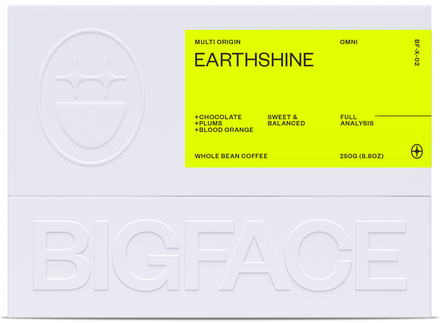
They are also the more forgiving format for home brewers. A well-constructed blend like Earthshine has a wider extraction window than most single origins. The chocolate and plum come through clearly across a range of grind sizes, temperatures, and ratios. You can brew it without a scale, at slightly off temperatures, with a rough grind -- and still produce a satisfying cup. That forgiveness is engineered into the blend construction. It is not an accident.
For espresso specifically, blends have historically dominated for this reason. Consistency under pressure, predictable flow, and a flavor profile that survives the concentration of espresso extraction -- these are blend strengths. Single origin espresso is a more advanced pursuit, and intentionally so.
The most useful framing is not which one is better but which one serves what you are trying to do at a given moment. Most serious coffee drinkers end up with both in rotation: a reliable OMNI blend for daily use and occasional isolated origin coffees for exploration and contrast.
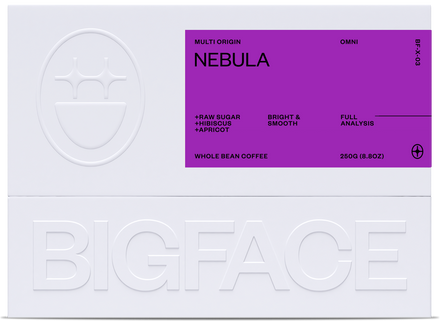
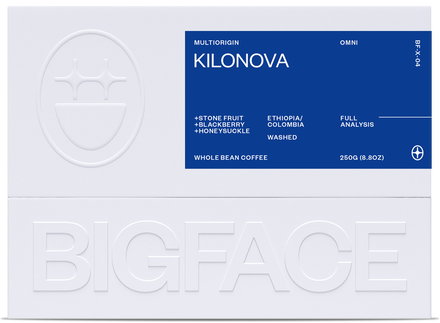
If you are just starting out with specialty coffee, begin with the OMNI Trio. The three blends give you a clear introduction to three distinct flavor profiles — fruity, balanced, and aromatic — across the same versatile roast philosophy. Learn what you like within that framework, then use isolated origins to go deeper into the specific territory that interests you most.
If you already know your preferences, let them guide you. Fruit-forward and floral? Explore the Ethiopian and Rwandan isolated origins. Rich and chocolatey? Earthshine and the Colombian lots. Bright and structured? The washed Guatemalan and Honduran coffees in the isolated origin lineup.
Single origin is not more serious than blends. Blends are not a compromise for people who do not know better. They are different formats built for different purposes, and both can be exceptional or mediocre depending on the sourcing and craft behind them.
At BIGFACE, we hold both to the same standard: exceptional raw material, handled with precision, roasted to serve the coffee rather than the convenience of the roaster. Whether it carries a blend name or a farm name, what is in the bag has earned its place there.
Explore the full BIGFACE coffee lineup — both OMNI blends and isolated origins, and find out what that means in the cup.